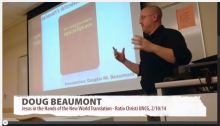
Answering Jehovah’s Witnesses with Their Own Bible
Just a quick link to a talk I gave recently that follows from my article Jesus in the hands of the New World Translation.
Just a quick link to a talk I gave recently that follows from my article Jesus in the hands of the New World Translation.

Introduction There are some logical fallacies that occur often enough to be given names. Some sound humorous, like “Arguing Against a Strawman” (which is when an opponent’s position is misrepresented and then attacked). Others have titles that have been distorted by pop culture, like “Begging the Question” (which refers to an argument that assumes its…
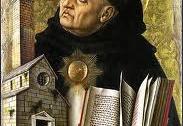
Introduction Saint Thomas Aquinas is famous for his philosophical proofs for the existence of God, but proving theism does not prove Christianity. Fortunately, Aquinas did not stop there. Although they are less well-known, and sprinkled throughout several of his works, Aquinas extended his apologetic arguments to the truth of Christianity itself. In many apologetic systems (e.g., McDowell, Geisler, or Montgomery), the…
The RNWT On October 5th the Jehovah’s Witnesses Watchtower Society announced that a revised New World Translation was being foisted upon the world. This “Silver Sword” is the first revision in nearly 30 years. “The 1961, 1981 and 1984 editions were more of updates than revisions. But the 2013 edition changes a considerable number of renderings…

Introduction It seems to be an unwritten rule that whenever an analogy for the Trinity is given, one must begin with the disclaimer that “all analogies break down.” The reason, though, that all analogies break down is simply because analogies compare things that are not exactly alike (if they were, it would not be an…

Introduction John MacArthur is a prolific and popular writer at the reformed end of the Evangelical spectrum. He is also a fierce anti-Catholic. On his blog he wrote a series of articles titled Exposing the Heresies of the Catholic Church which are (and I do not say this lightly) surprisingly bad. I will be responding to some of…
Introduction John MacArthur is a prolific and popular writer at the reformed end of the Evangelical spectrum. He is also a fierce anti-Catholic. On his blog he wrote a series of articles titled Exposing the Heresies of the Catholic Church which are (and I do not say this lightly) surprisingly bad. I will be responding to some of…
Introduction One of the most convicting (i.e., terrifying) theological passages I ever read had to do with lack of faith. Now, a reasonable guess as to its content would be something about the threat of Hell – maybe a Sinners In The Hands of An Angry God sort of thing. But it wasn’t. In fact,…
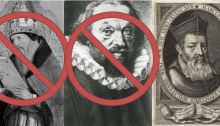
“In necessariis unitas, in dubiis libertas, in omnibus caritas.” These words, translated variously as “in essentials unity, in non-essentials liberty, and in all things charity,” or, “unity in necessary things; liberty in doubtful things; charity in all things,” have often been assigned to St. Augustine and used as a sort of get-out-of-debate free card for…

Biblical Perspicuity Arguments based on disagreements in biblical interpretation are often answered with an appeal to biblical perspicuity (clarity). The appeal takes many forms. One is the idea is that the Bible is clear on “the main things,” and so disagreements are no big deal because they must, by definition, be over secondary issues. Another…

