
Top 5 Catholic Books
The Church has created a massive number of texts over her 2,000 year lifespan, and it can be overwhelming to even consider reading them all! The good news is that among the millions of volumes of writing the Church has produced, many of them are summaries or collections with which one can be prepared to meet nearly any need. Here are my pick for the top five reference books, listed in the order I would suggest getting them if you cannot get them all at once.
1. Sacred Scripture (The Bible)
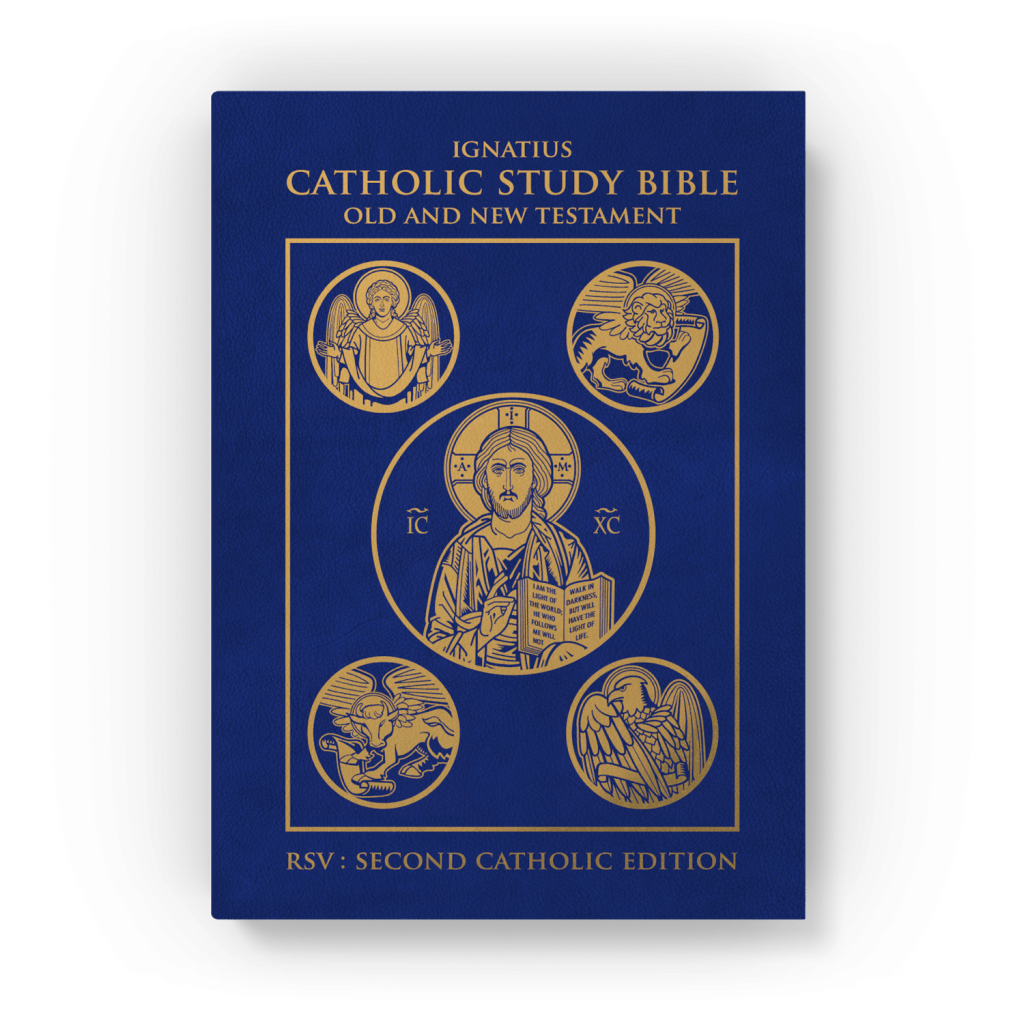
All Catholics need a Bible – but which one? I wrote a separate article on this subject, so I will be brief: get one you’ll read and that isn’t going to lead you astray with a theologically-biased canon (i.e., Protestant), translation, or study notes (including bad Catholic notes – I did a whole video on this.) Long story short: the absolute hands-down, no-brainer, without question, best Bible for Catholics is the Ignatius Catholic Study Bible (Old and New Testaments).
2. The Catechism of the Catholic Church
The Catechism of the Catholic Church (2nd Ed.) is an extremely valuable resource for understanding Catholic theology. The topics are presented in logical order under four major headings (“pillars”): Creed, Sacraments, Morality, and Prayer. It can be used as an Encyclopedia of Catholic theology, or read straight through. While not itself infallible, it’s the most trustworthy and up-to-date compilation of Catholic theology available.
Note that this is not the first Catholic Catechism. The very first was the Catechism of the Council of Trent – still a valuable resource for specifically Catholic (vs. Protestant) theology. For catechetical purposes, also see the Baltimore Catechism which presents the Catholic faith in a series of questions designed for memorization.
Also of value is The Companion to the Catechism of the Catholic Church which gives the texts cited in the Catechism (even Bible passages) in order of reference. It is like having a librarian running around opening books to the correct page in front of you as you read the Catechism so you don’t have to get up and find them yourself.
3. The Code of Canon Law

The Code of Canon Law (Make sure to get the current edition! As of 2025 it is the 4th printing of 2017) “Canon Law” probably sounds intimidating, but it’s actually quite helpful. Where the Catechism focuses on Catholic theology, the Code presents Catholic practices. So, if you have questions about how to receive the sacraments, choose Godparents, deal with divorce, become a priest, serve at Mass, etc., this book has it all. (One caution: the Church actually has trained Canon Lawyers to deal with tricky situations, so don’t try to be a hero.)
4. Fundamentals of Catholic Dogma
Fundamentals of Catholic Dogma by Ludwig Ott is not only a handy listing of Catholic doctrines, it is a well-written explanation of them as well. One of the most outstanding features of Fundamentals is that it lists the sources of Catholic theology as well as each doctrine’s grade of theological certainty.
5. The Sources of Catholic Dogma
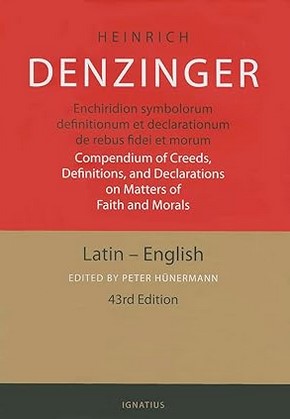
Heinrich Denzinger’s work Sources of Catholic Dogma (aka Enchiridion Symbolorum) is an historical compendium of official church documents and theological source texts. It is a standard resource, and indispensable for scholarly theology work (other theological works use Denzinger’s numbering system for their own citations).

Neuner and Dupuis’s The Christian Faith is a more recent resource that contains much of the same material as Denzinger, but arranges it topically rather than historically (it also includes a convenient concordance to Denzinger).
Conclusion
There are a LOT more books that faithful Catholics will want to get over the years, but these reference materials will go a long way toward one’s preparation for Catholic thought.


 Douglas Beaumont